
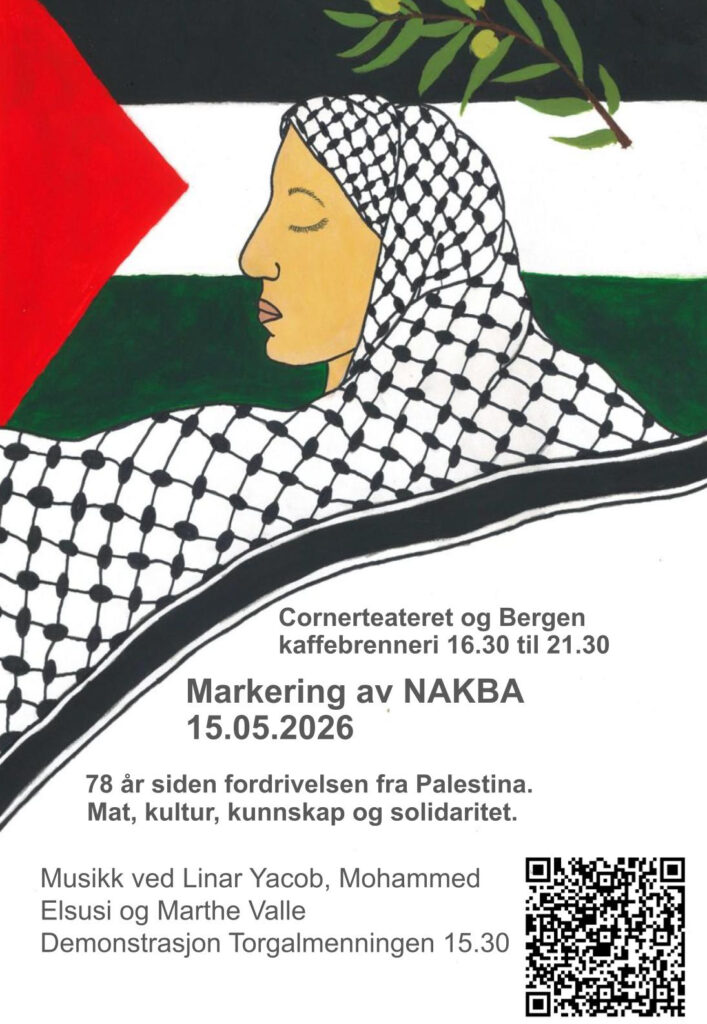
Show solidarity, gain more knowledge, experience Palestinian food and culture.
Demonstration Torgallmenningen 15:30, program Cornerteateret and Bergen Kaffebrenneri 16:30 – 21:30.
In Bergen, we have a tradition of marking Nakba (Catastrophe) Day on May 15.
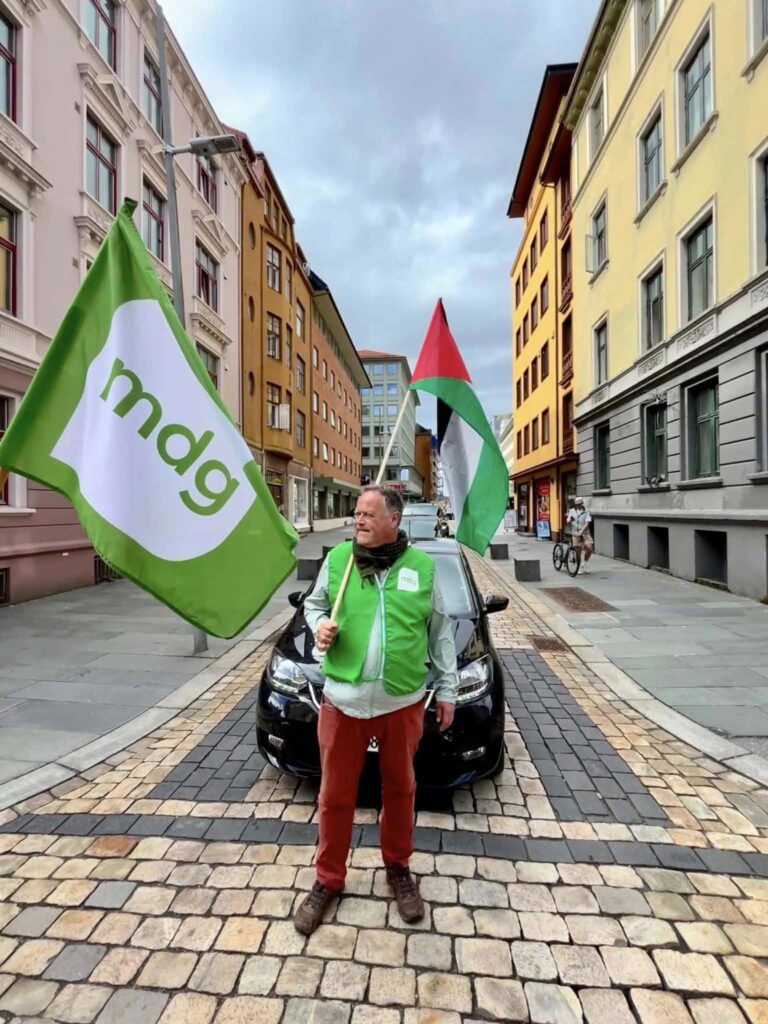
This year, we aim for a broad event where the Palestine Committee in Bergen, Norwegian People’s Aid, LO in Bergen and the surrounding area, the Labour Party in Bergen, Rødt, International Women’s League for Peace and Freedom, Socialist Youth, SV, MDG, Cornerteateret, and several individuals are involved as organizers.
There will be a line-up and Nakba march from Den Blå Steinen at 3:30 p.m. Roll call by Thomas Høiseth (leader of the Palestine Committee in Bergen), and then we will go together to Møhlenpris.
The route will be Ole Bulls square-Engen-Magnus Bartfotsgate-Øysteinsgate-Sydnesplassen-Langesgate-Museplass-Olaf Ryes vei – Wolfsgate-Thor Møhlensgate-Cornerteateret.
The event will be held at the Corner Theatre at Møhlenpris from 1630 to 2130.
Program:
Welcome by the Nakba Committee
Appeals:
Nasreen Ahmed, Deputy Chair of the Palestine Committee in Norway
Hussam Ahmad from Yalla yalla kaffe
Susan Hassan Abdallah from Global Sumud Flotilla Norway
Linn Kristin Langley Engø from the Labour Party in Bergen
Panel discussion with Mohammed Elsusi and Frode Bjerkestrand
Lecture by Sissel Rosland from Historians for Palestina
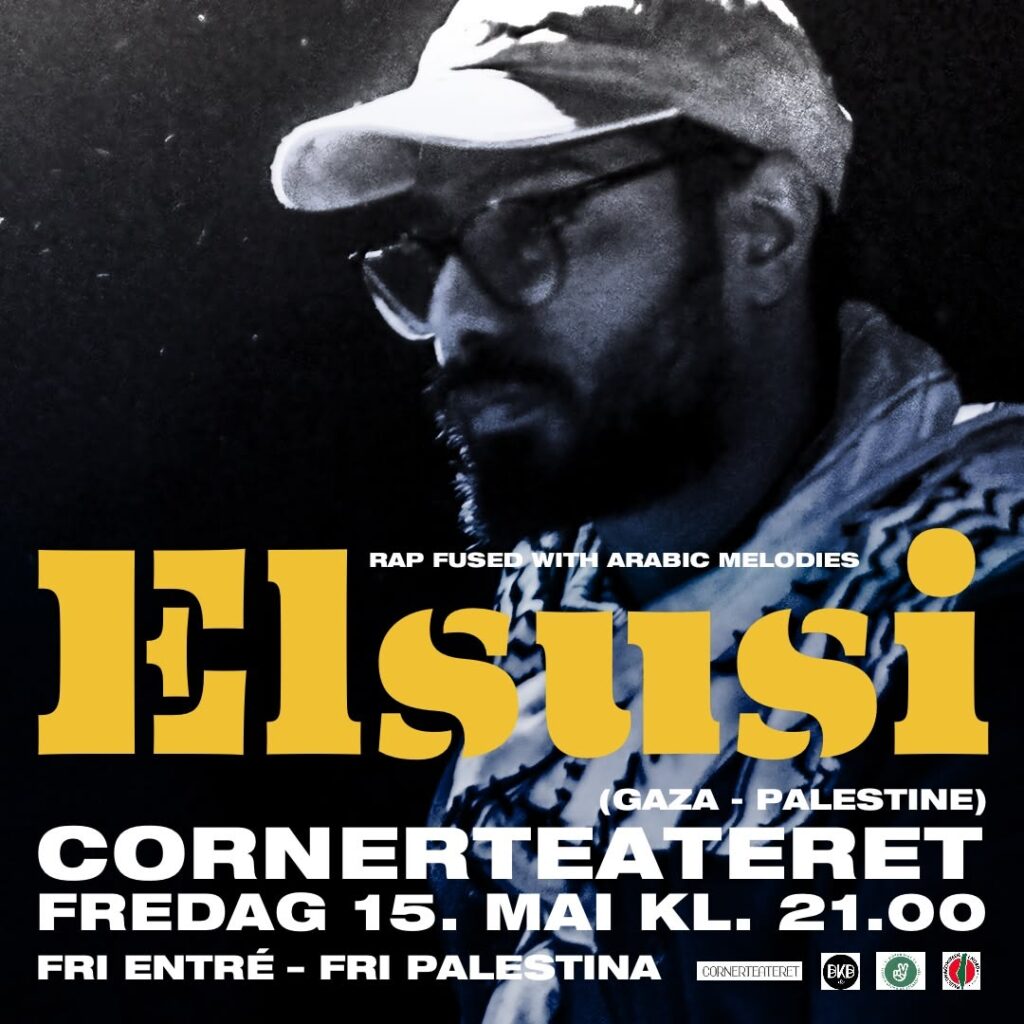
Music with Elsusi, Marthe Valle, and Linar Yacob
Poster exhibition by Mats Grorud
Poster exhibition by Geir Goosen
Auction by Strikk for Palestina
Palestinian food
There is no entrance fee, but we would like to encourage people to pay a voluntary entrance fee. The proceeds will mainly cover the rental of premises and technical equipment, travel and accommodation expenses, and the purchase of food.
Wikipedia: The Nakba (Arabic: النَّكْبَة, romanized: an-Nakba, lit. ‘the catastrophe’) is the ethnic cleansing[14] of Palestinian Arabs by Israel through their violent displacement and dispossession of land, property, and belongings, along with the destruction of their society and the suppression of their culture, identity, political rights, and national aspirations.[15] The term is used to describe the events of the 1948 Palestine war in Mandatory Palestine as well as Israel’s ongoing persecution and displacement of Palestinians.[16] As a whole, it covers the fracturing of Palestinian society and the longstanding rejection of the right of return for Palestinian refugees and their descendants.[17][18]
The day commemorates 78 years since the ethnic cleansing carried out by Zionist militias against the Palestinians in 1948, when they forcibly displaced over 750,000 Palestinians and destroyed 531 Palestinian villages and towns. This is how the militia established the state of Israel.
They settled in refugee camps in Lebanon, Syria, Jordan, the West Bank, and Gaza. Most of those who were displaced (who are still alive) and their families still live in the same refugee camps. The genocide in Gaza and the brutal occupation of the West Bank are drowned in today’s media image. But the genocide is in full swing, and the occupation of the West Bank is becoming more and more brutal. Recently, Israel also passed a law on the death penalty that only affects Palestinians.
You must not sit safely in your home
and say: It is sad, poor them!
You must not endure so heartily
the injustice that does not befall upon yourself!
I cry with the last breath of my voice:
You are not allowed to go there and forget!
Ninth stanza, a warning against indifference in the poem “You must not sleep” by Arnulf Øverland
For the Palestinians, the Nakba is not history. It continues day after day. Millions of Palestinians still live as refugees in neighboring countries around Palestine or as internally displaced persons, with no possibility of returning home. UN Resolution 194 establishes the right of return and compensation for Palestinian refugees, but over 78 years later, Israel continues to deny the Palestinians this right. The UN and the International Court of Justice have repeatedly warned of Israel’s violations of international law, illegal occupation, settlement policies, and serious human rights violations against the Palestinians.
In the Gaza Strip, the occupied West Bank, and in Jerusalem, Palestinians live under occupation, apartheid, blockade, bombing, forced displacement, and increasingly brutal violence, abuse, and killing. This spring, Israel has also bombed and destroyed villages and entered and occupied southern Lebanon, displacing another million Palestinian refugees. Increasingly, areas of the West Bank are being annexed or colonized through illegal Israeli settlements. Palestinian homes are being demolished, families are being displaced, and civilians are being killed almost daily.
In the tenth stanza, Øverland warns against the underlying hatred and contempt for humanity:
Do not forgive them; they know what they are doing!
They breathe the embers of hatred and evil!
They like to kill, they delight in misery,
They want to see our world in flames!
They want to drown us all in blood!
Don’t you believe it? You know it!
At the same time, we are seeing increasingly extreme laws and policies from the Israeli authorities. Israel has recently opened up the use of the death penalty, targeting only Palestinians by hanging. This is a serious violation of basic human rights and a clear example of an apartheid system where different laws and rights apply to different people based on ethnicity and nationality. When Palestinians live under military courts, while Israeli illegal settlers in the same area are tried under civil laws, it shows how deeply the discrimination is institutionalized.
Three years into the genocide in Gaza, we are also seeing another dangerous development: the world’s attention is starting to turn away. The media is reporting less. Many are feeling powerless, apathetic, and exhausted. More and more people are asking themselves if anything is working. That is precisely why we must continue.
History shows that solidarity work is a marathon, not a sprint. The Palestinians do not need the world to give up because the fight is taking a long time. They need people who continue to care even when the headlines are fewer. They need people who continue to protest, organize, write, share knowledge, and put pressure on politicians and authorities.
Hope is not something you feel passively. Hope is something you create through action. Nakba Day is therefore not just a day to remember history. It is also a day to protest the injustice that continues to happen – and a reminder that solidarity means persevering, even when it feels heavy.
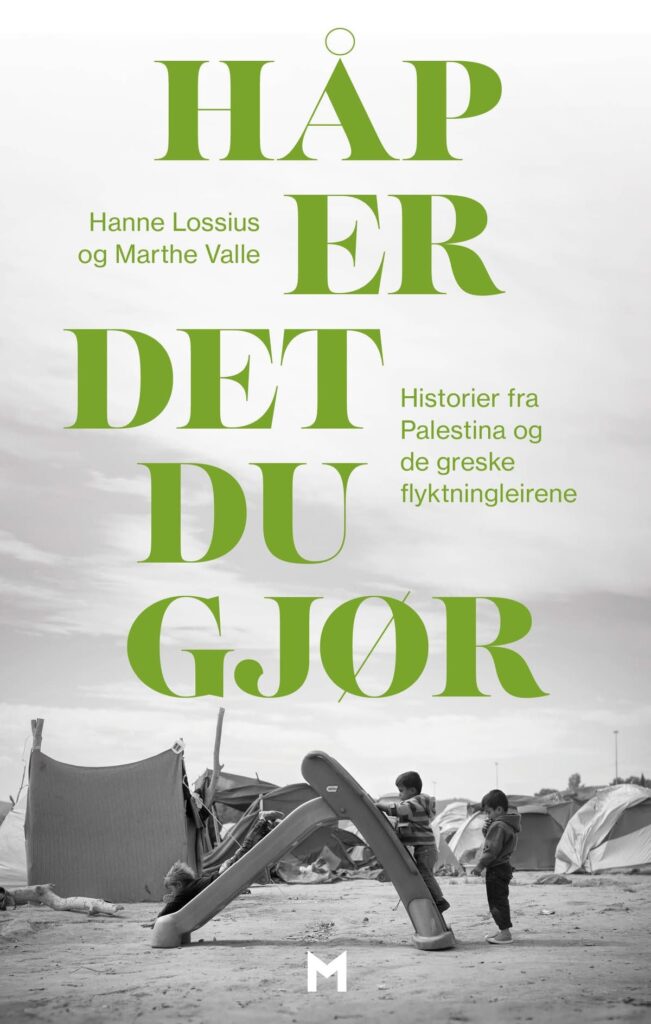
Hope is what you do. It is a verb, an action, not an abstract feeling that we have no control over. Hope is what you do. Hope is what we do.
– Mitri Raheb, Pastor, author and rector of the Bethlehem University of the Arts
Nakba is not just about the past. It is about the cruel actions that Israel is still doing to the Palestinians right now. Silence helps the oppressor, never the oppressed.
The Palestine Committee in Bergen, together with many organizations and parties, marks Nakba Day on Friday, May 15. We will meet at Den Blå Steinen at 3:30 PM and march to the Corner Theater at Møhlenpris. There will be an event with appeals, lectures, culture, an auction of Palestinian dresses, a sales exhibition of posters, and good food. We invite everyone who supports human rights, international law, and justice for the Palestinians to participate.
Einar Ingebrigtsen, Deputy Chairman of the Palestine Committee in Bergen
Hope is what you do
Historical maps of Palestine are essential to understanding the situation on the ground today. From 1920 to 1948, Palestine was under a British mandate. As early as 1917, the then British Foreign Secretary, Alfred Balfour, had signed a declaration to the British Zionist leader Walter Rothschild stating that Britain’s intention was to support the establishment of a Jewish state in Palestine. Later, World War II followed with the Nazi genocide of the Jewish people. The Zionists were granted their wish two years later, in 1947, when the UN created a partition plan for Palestine. At that time, there were some scattered Jewish areas in the country. The State of Israel was established in 1948, and 750,000 Palestinians were forced to flee their homes that same year. In Palestinian history, this is known as al-Nakba. Nakba is the Arabic word for catastrophe. Since then, more and more Palestinian areas have been annexed and taken over by Israel, in clear violation of international law. Palestine today consists of the West Bank and Gaza. The two areas are physically and geographically completely separated from each other. No one enters or leaves Gaza without a military permit. This means that those who live in Gaza are confined. The average age in Gaza is 18 years old, and forty percent of those who live in Gaza are under 14 years old. Because of its young population, Gaza has been called the world’s largest open-air children’s prison. The population lives in poverty, and over half have a refugee background following the expulsion of the Palestinians in 1948.
[Before October 7, 2023:] Healthcare workers in Gaza had experienced four major Israeli military attacks since 2006. For them, this meant living in hospitals for periods to be available to patients around the clock, knowing that their own families could be the next patients to arrive seriously injured or killed through the doors of the emergency rooms.
- “Operation Summer Rain” 2006
- “Operation Cast Lead” 2008/2009
- “Operation Pillar of Defence” 2012
- “Operation Protective Edge” 2014
In total, around 4,000 Palestinians were killed in these attacks, and more than 17,000 were injured. Many of the injured had to have body parts amputated and received treatment at ALPC. – Hanne Lossius, Hope is what you do, The Longest Mile

Comments are closed.