
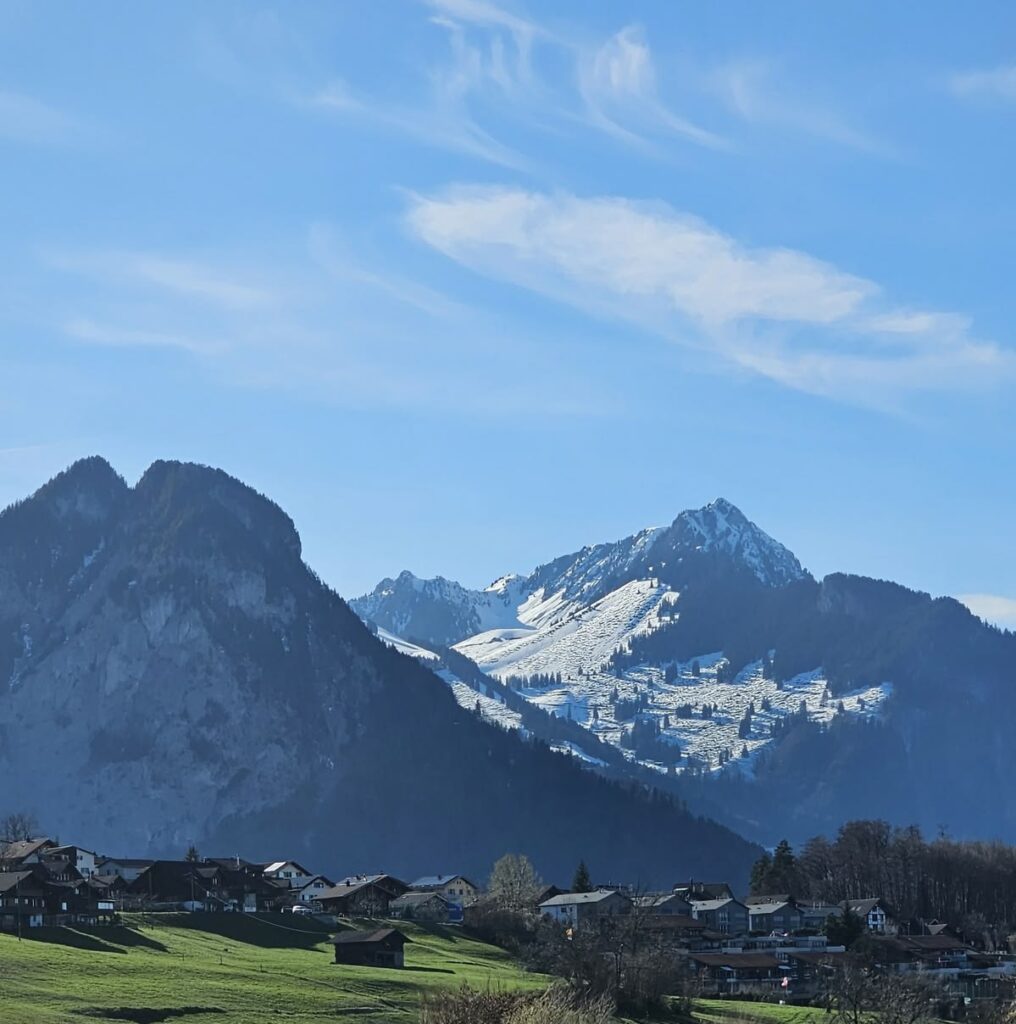
Like Norway, Switzerland is an EEA member (European Economic Area). Situated in the middle of Europe, surrounded by major food-producing countries, Swiss politicians have still prioritized ensuring food self-sufficiency, protection of natural resources, biodiversity, and dispersed settlement in the Constitution.
Norway ranks in the middle tier for food self-sufficiency in Europe, producing about 40% to 50% of the food it consumes by energy. However, when measuring overall food security—which accounts for affordability, availability, and quality—Norway ranks 3rd in Europe and globally, behind only Finland and Ireland.
Because of its cold climate, short growing seasons, and limited arable land, Norway’s domestic agricultural output is highly specialized. Here is a breakdown of the country’s self-sufficiency rates across different food categories:
- Animal Products & Dairy: Self-sufficiency is very high, typically reaching near 100% for milk and cream, and roughly 95% for meat and eggs.
- Seafood: Norway is a massive net exporter of fish, producing far more than its population consumes.
- Grains & Cereals: Domestic production heavily depends on the year’s harvest, but Norway generally produces only about 20% to 40% of its grain/flour needs for direct human consumption (the vast majority of domestic grain goes to animal feed).
- Fruits & Berries: The country only produces about 6% of the fruits and berries consumed domestically.
- Vegetables: Norway produced 46% of its consumed vegetables in 2013, a decrease from 55% in 2005.
- Because of its reliance on imports for vital crops and animal feed, Norwegian authorities have raised concerns about emergency preparedness in the event of a long-term supply crisis, setting a national political target to reach 50% self-sufficiency.
NIBIO Different calculation methods can lead to major variations in food self-sufficiency rates
Food self-sufficiency rate
Food self-sufficiency rate refers to how much of the food we eat we produce ourselves. Without adjusting for imported feed, our food self-sufficiency rate is 40–45%. When corrected for imported feed, it is 30–35%.
The [Norwegian] government aims to increase the feed-adjusted food self-sufficiency rate to 50%.
Guyana is the only country that is self-sufficient in all seven food groups: fruit, vegetables, dairy, fish, meat, legumes, nuts and seeds, and starchy staples. China and Vietnam attain six. Only one in seven countries, most within Europe and South America, achieves self-sufficiency in five or more food groups. Six countries, Afghanistan, the United Arab Emirates, Iraq, China, Macao Special Administrative Region, Qatar, and Yemen, do not achieve the needs of any food group, while more than one-third of all countries, mostly in Africa, achieve self-sufficiency for two or fewer groups.
Article 104 of the Swiss Federal Constitution serves as the foundational legal framework for Switzerland’s agricultural policy. It tasks the national government with ensuring the agricultural sector contributes to reliable food supplies, preserves natural resources, maintains the countryside, encourages rural settlement, and guarantees high animal welfare standards.
Article 104 directs the Confederation to create framework conditions so that farming families can meet public demands through sustainable, market-oriented production. The mandate requires the sector to:
- Ensure Food Security: Guarantee a reliable food supply for the population.
- Protect the Environment: Maintain natural resources and manage the countryside.
- Support Rural Communities: Encourage decentralized, rural settlement and regional development.
- Maintain Animal Welfare: Guarantee high standards for livestock and farm animals.
The federal government fulfills this constitutional mandate primarily through the Federal Act on Agriculture, which regulates production rules, trade conditions, and direct payments to farmers.
To receive these direct payments, farmers must adhere to “Proof of Ecological Performance” (PEP). This includes mandatory crop rotation, strict fertilizer balances, soil protection measures, appropriate animal welfare standards, and setting aside a minimum of 7% of their land as ecological compensation areas.
Article 104 is closely supported by Article 104a (Food Security), which was added following a 2017 national referendum. Article 104a expands the Confederation’s duties to include protecting agricultural land from urban sprawl, promoting cross-border trade that contributes to sustainable development, and maintaining agricultural production capabilities across the country.
ART. 104 AGRICULTURE
1 The Confederation shall ensure that the agricultural sector, by means of a sustainable and market-oriented production policy, makes an essential contribution towards:
a. the reliable provision of the population with foodstuffs;
b. the conservation of natural resources and the upkeep of the countryside;
c. decentralised population settlement of the country.
2. In addition to the self-help measures that can reasonably be expected in the agriculture sector and, if necessary, in derogation from the principle of economic freedom, the Confederation shall support farms that cultivate the land.
3. The Confederation shall organise measures in such a manner that the agricultural sector fulfils its multi-functional duties. It has, in particular, the following powers and duties:
a. supplementing revenues from agriculture by means of direct subsidies to achieve fair and adequate remuneration for the services provided, subject to proof of compliance with ecological requirements;
b. encouraging by means of economically advantageous incentives methods of production that are specifically near-natural and respectful of both the environment and livestock;
c. legislating on declarations of origin, quality, production methods and processing procedures for foodstuffs;
d. protecting the environment against the detrimental effects of the excessive use of fertilisers, chemicals, and other auxiliary agents;
e. at its discretion, encouraging agricultural research, counselling and education, and subsidising investments;
f. at its discretion, legislating on the consolidation of agricultural property holdings.
4. For these purposes, the Confederation shall provide both funds earmarked for the agricultural sector and general federal funds.
 ART. 104A 61 FOOD SECURITY
To guarantee the supply of food to the population, the Confederation shall create the conditions required for:
a. safeguarding the basis for agricultural production, and agricultural land in particular;
b. food production that is adapted to local conditions and which uses natural resources efficiently;
c. an agriculture and food sector that responds to market requirements;
d. cross-border trade relations that contribute to the sustainable development of the agriculture and food sector;
e. using food in a way that conserves natural resources.


Comments are closed.