
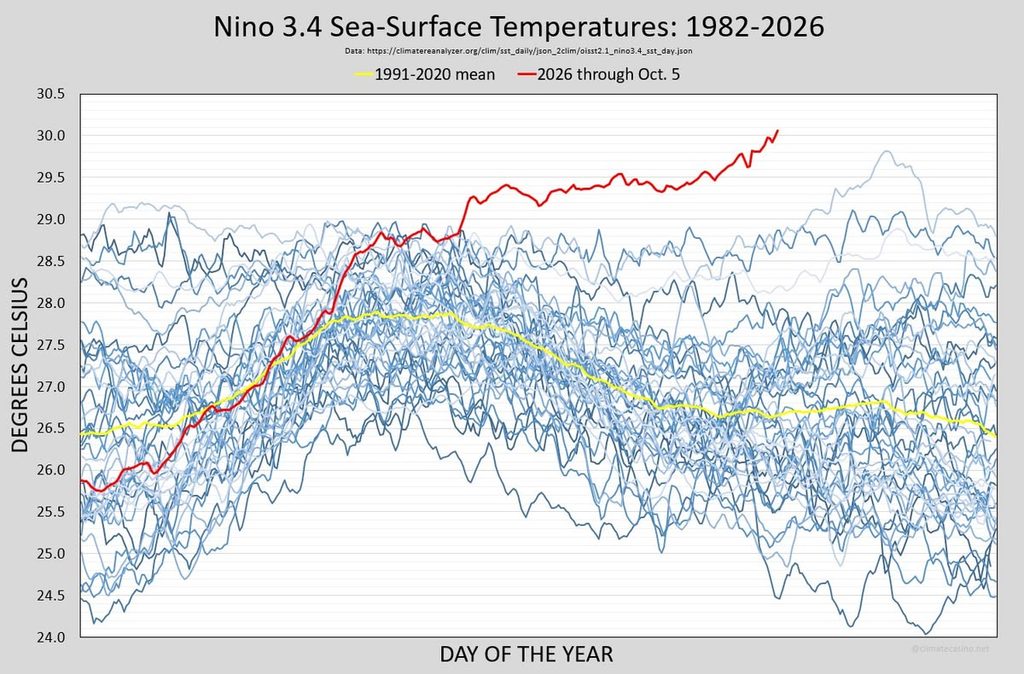
For the first time in recorded history, the Niño 3.4 sea-surface temperature (SST) is above 30.0°C, reaching a preliminary SST of 30.06°C on October 5th.
The Niño 3.4 SST anomaly is now 3.41°C above the 1991-2020 baseline.
Updated October 12, September 14, July 2, 2026, first published October 31, 2024
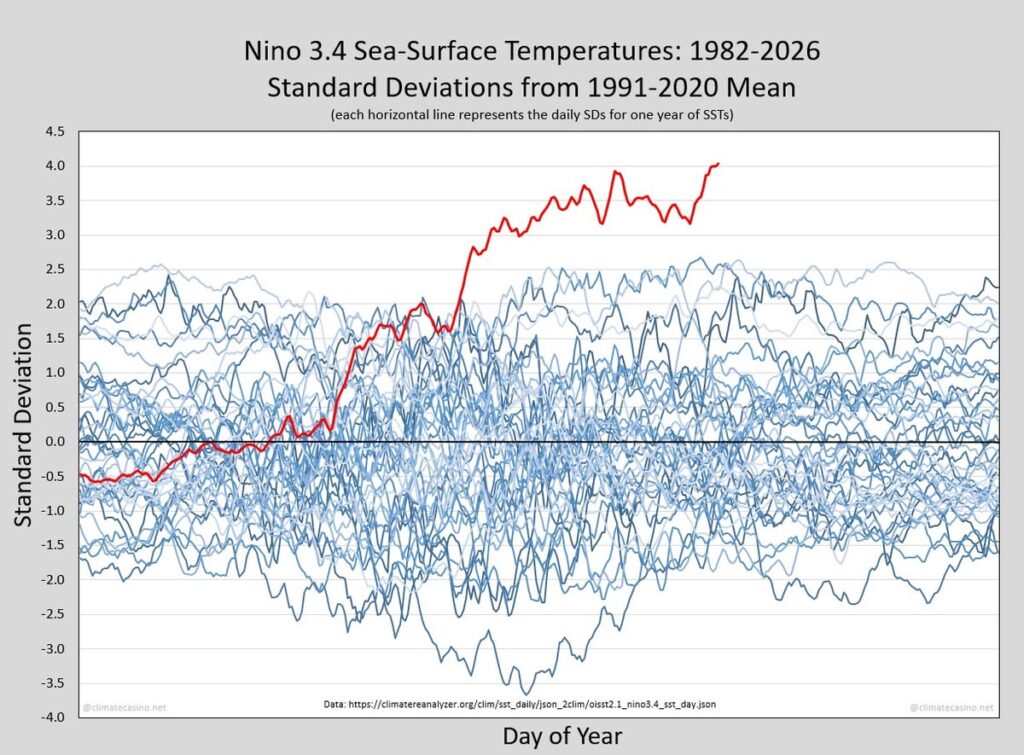
On September 11th, the preliminary Niño 3.4 sea-surface temperature measured 2.98°C above the 1991-2020 mean, which was 4.03 standard deviations above the mean. No previous year has broken 3SD. Prof. Eliot Jacobson

🔴⚠️🌡️🌊The unprecedented #heatwave over #Europe is bringing its effects also to the Mediterranean Sea. In the last few days the #Copernicus Sea Surface Temperature has rapidly increased and the latest anomaly data exceed 8°C
⬇️SST daily anomaly on 27 June 2026 #climateemergency— Antonio Vecoli (@tonyveco on X) (@tonyveco.bsky.social) June 28, 2026 at 5:15 PM
Green sea turtles have their sex set by the temperature of the sand, not chromosomes. Six justices just built a legal system on a definition of sex that a turtle egg can casually violate. #marinelife
— Dr Craig R McClain (@drcraigmc.bsky.social) July 1, 2026 at 3:00 AM
Why is so much of the ocean red?
Short answer: because it’s hot, way too hot.
This animation shows global average sea surface temperature anomalies for June 2026, compared with the 1991-2020 average.
The darker the red, the more the water is running above what’s normal for that… pic.twitter.com/jdlCaiA7K9— Dreams N Science (@dreamsNscience) July 2, 2026
🌊 NASA Just Spotted a Massive “Invisible” El Niño from Space!
In early June 2026, the Sentinel-6 Michael Freilich satellite didn’t just see warmer water, it measured the ocean itself rising across the Pacific.
Warmer water expands, creating a huge red-orange band of elevated… pic.twitter.com/WxCgQTqMYG
— Dreams N Science (@dreamsNscience) June 27, 2026
— BladeoftheSun (@BladeoftheS) June 30, 2026
El Nino has already made the average Sea temperature 0.3c higher than it has ever been and it doesn’t hit its peak till Christmas. pic.twitter.com/PBuAIYMBQ2
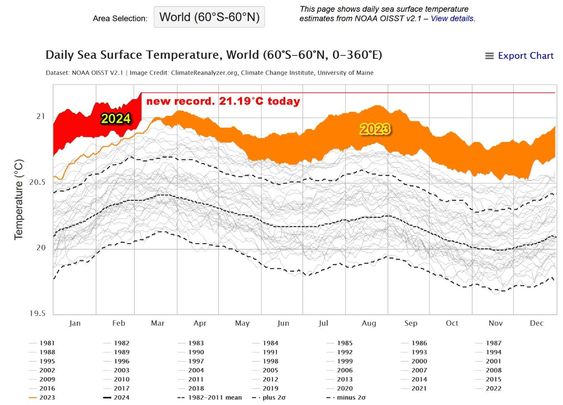
According to data from the Copernicus Ocean Monitoring Agency, the global average sea surface temperature recently exceeded 21.0°C, setting a record high for this time of year since records began.http://greenearth.icu/index.php/2026/07/01/global-sea-surface-temperatures-hit-new-record-high/
Not to be outdone, that bratty little area of the Pacific ocean known as "Niño 3.4" also set a new record high average sea-surface temperature for the month of June, crushing the previous record set in June, 2015 by over 0.5°C. pic.twitter.com/Jjrft3DfRG
— Prof. Eliot Jacobson (@EliotJacobson) July 1, 2026
Sea surface temperatures in late June reached nearly 70 degrees Fahrenheit on average, shattering recordshttps://t.co/XaNF5fHwjp
— Scientific American (@sciam) July 1, 2026
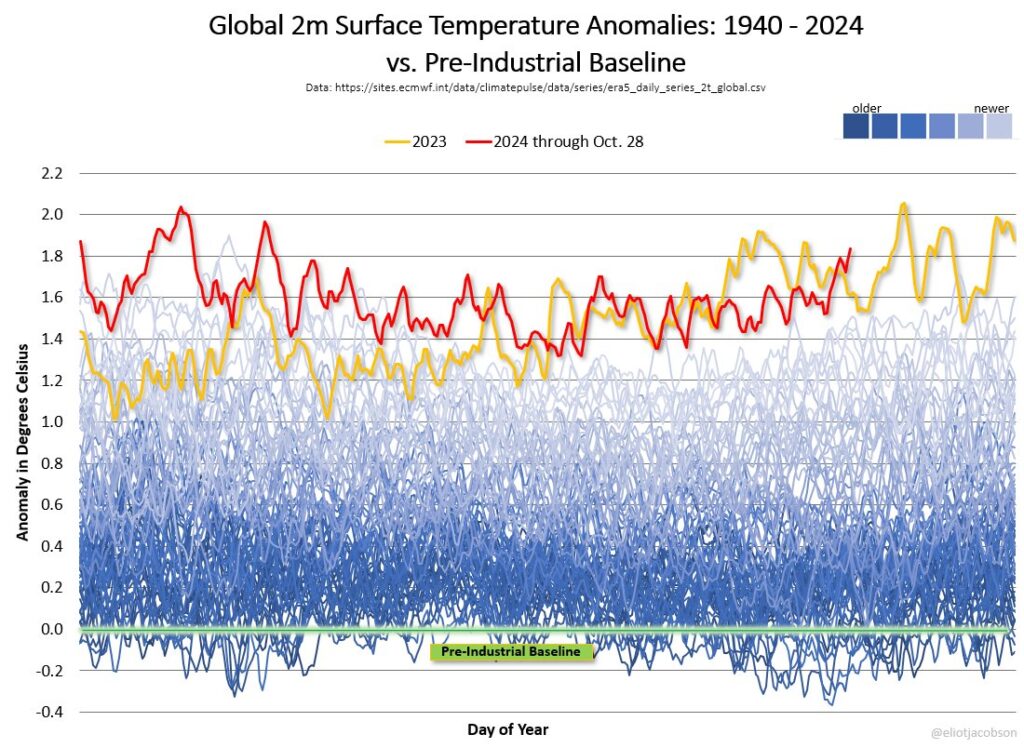
The global surface temperature anomaly is back over 1.8°C, at 1.83°C as of October 28th. This smashes last year’s record for the same day of 1.61°C – the same as the average anomaly so far this year@EliotJacobson
Posted July 15, 2024:
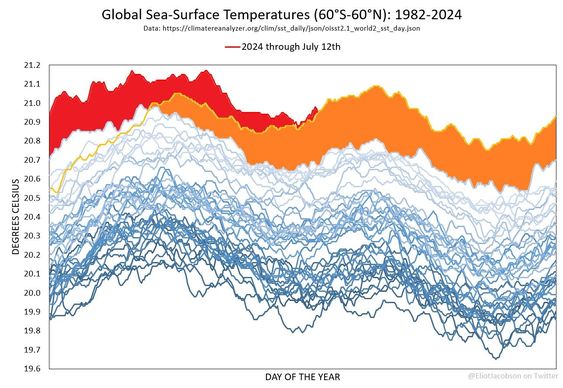
This year is set to be the warmest on record, with global surface air temperatures exceeding the 1.5°C threshold for the past 12 months and sea temperatures reaching their highest for 15 consecutive months.
Via @FinancialTimes https://t.co/nMi8xiusSV
— Víctor Fabregat Tena (@v_fabregat) July 14, 2024
This graph is a testament to how absurdly warm global sea surface temperatures have been over the last 12 months. Out of all the data visualizations I have posted on here so far, this might genuinely be the most alarming one. pic.twitter.com/xXPzLxgTkH
— Nahel Belgherze (@WxNB_) June 8, 2024
Copernicus: February 2024 was globally the warmest on record
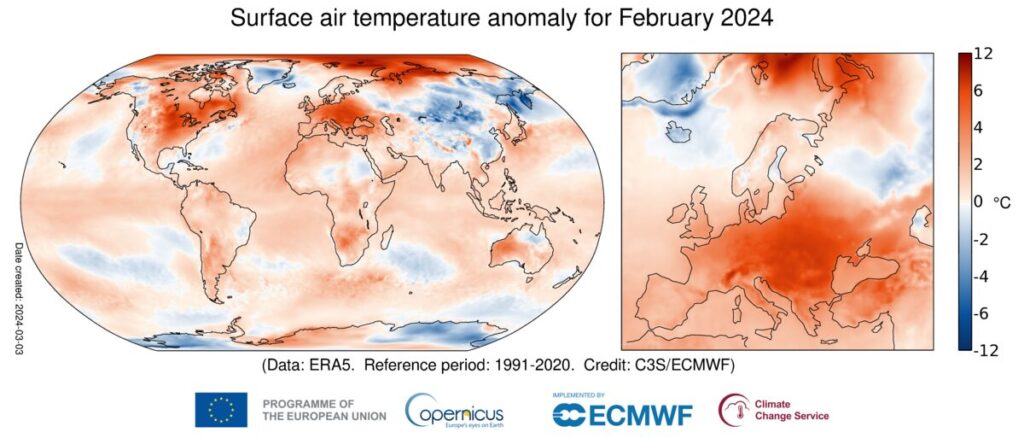
The Copernicus Climate Change Service (C3S), implemented by the European Centre for Medium-Range Weather Forecasts on behalf of the European Commission with funding from the EU, routinely publishes monthly climate bulletins reporting on the changes observed in global surface air and sea temperatures, sea ice cover and hydrological variables. All the reported findings are based on computer-generated analyses and, according to the ERA5 reanalysis dataset, using billions of measurements from satellites, ships, aircraft, and weather stations around the world.
February joins the long streak of records of the last few months. As remarkable as this might appear, it is not really surprising as the continuous warming of the climate system inevitably leads to new temperature extremes. The climate responds to the actual concentrations of greenhouse gases in the atmosphere so, unless we manage to stabilise those, we will inevitably face new global temperature records and their consequences.”
Carlo Buentempo, Director of the Copernicus Climate Change Service



Comments are closed.